
VETHY / FLEET AND OEM BUYER GUIDANCE
Buying 12V parking AC for a US truck fleet.
Choose a 12V parking air conditioner by its documented vehicle fit, usable battery energy and performance in your operating conditions. For a fleet purchase, a repeatable installation and an agreed sample test matter as much as the published cooling rating.
Write the operating requirement first
Identify the tractor make, model, model year and sleeper arrangement. State the destination market, summer ambient conditions, parking duration, occupancy and whether cooling alone or heating and cooling is required. Record insulation, window exposure and other electrical loads. A familiar truck model name does not establish a universal installation.
For mixed fleets, group vehicles by cab and electrical configuration. One approved trial does not automatically validate a different roof, battery arrangement or mounting location.
Compare the exact 12V configuration
| Model | Layout and function | Cooling output | Cooling current | Refrigerant |
|---|---|---|---|---|
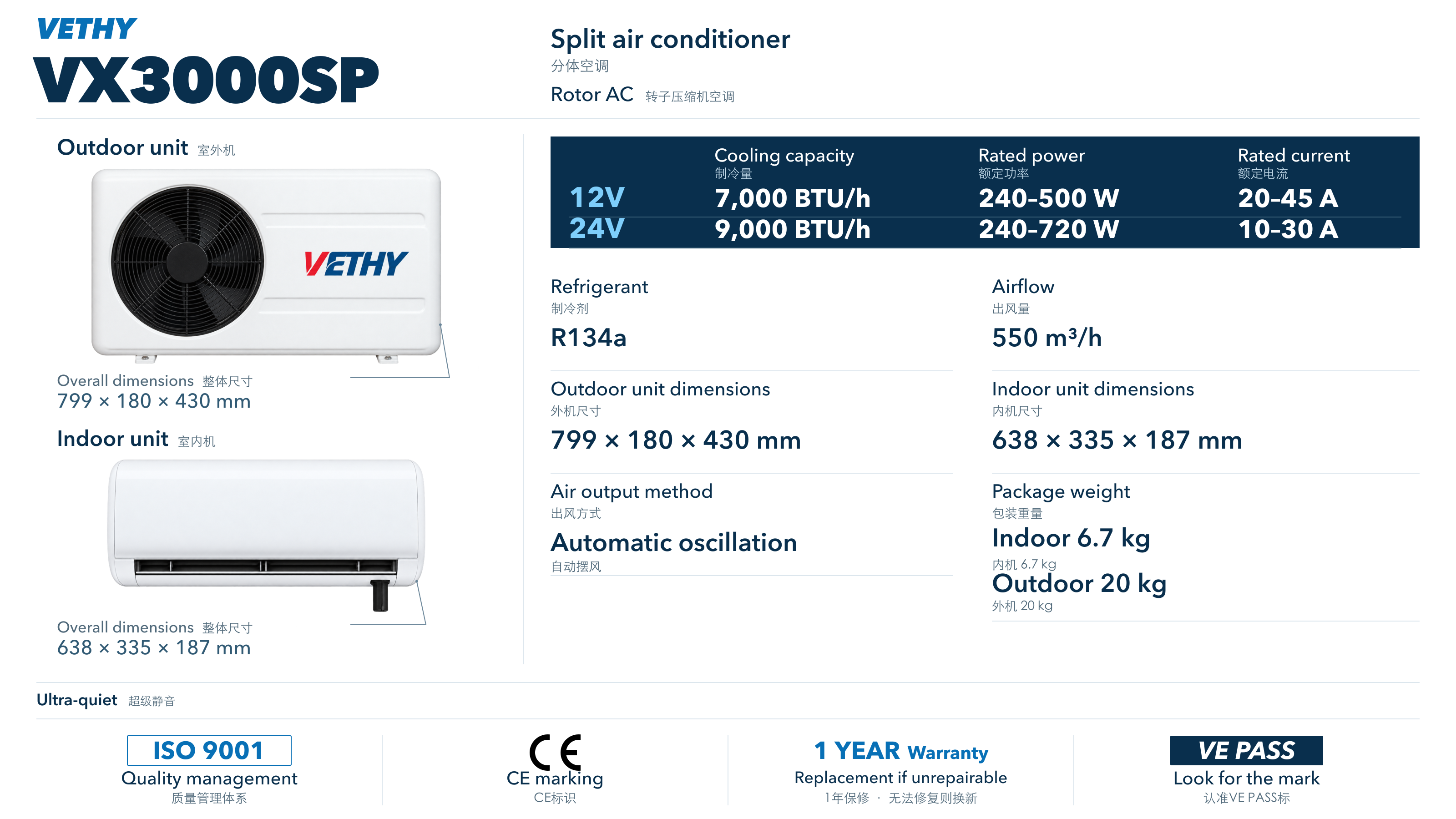
| VX3000SP | Split, cooling | 7,000 BTU/h | 20–45 A | R134a |
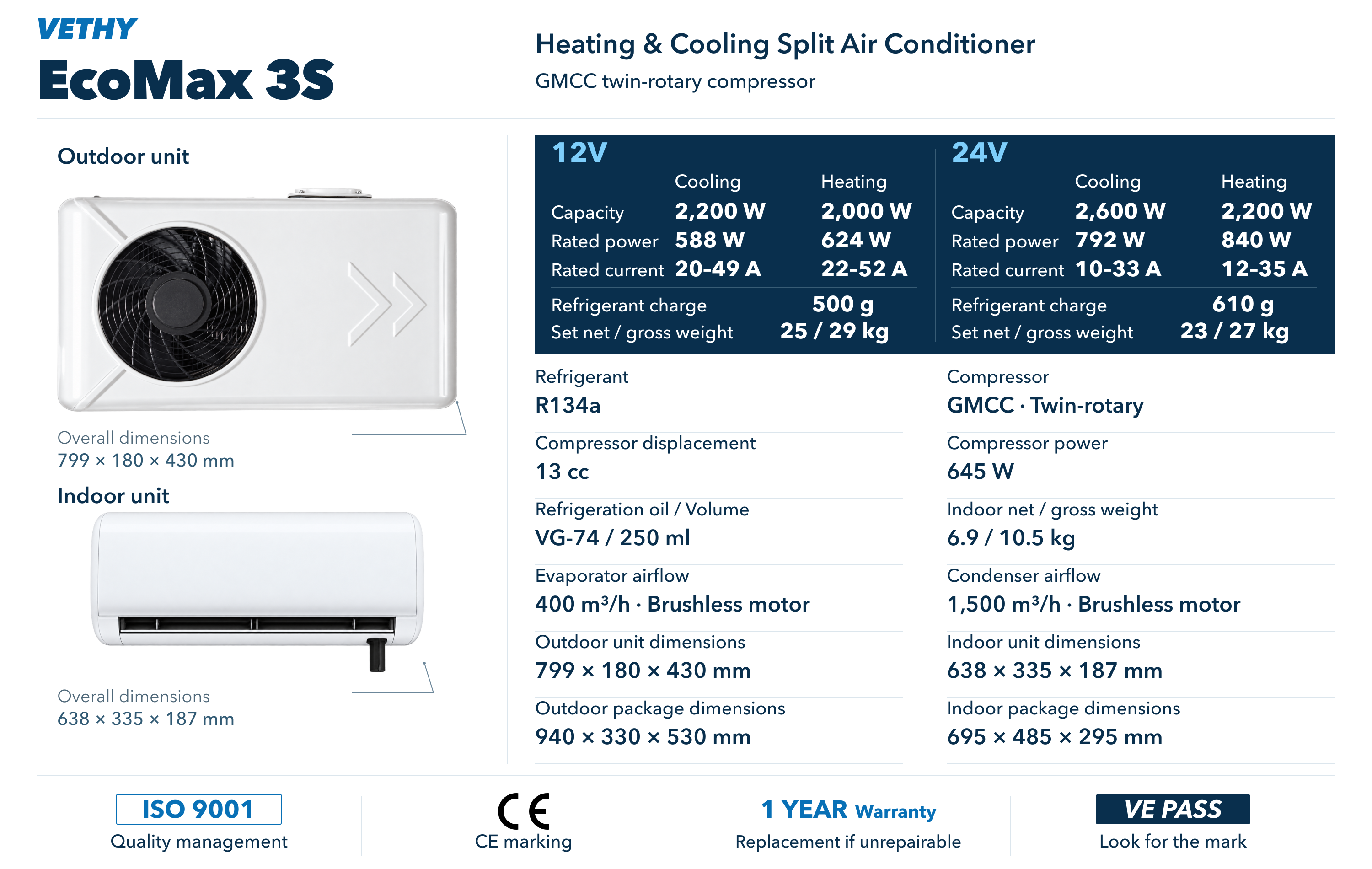
| EcoMax 3S | Split, heating and cooling | 2,200 W | 20–49 A | R134a |
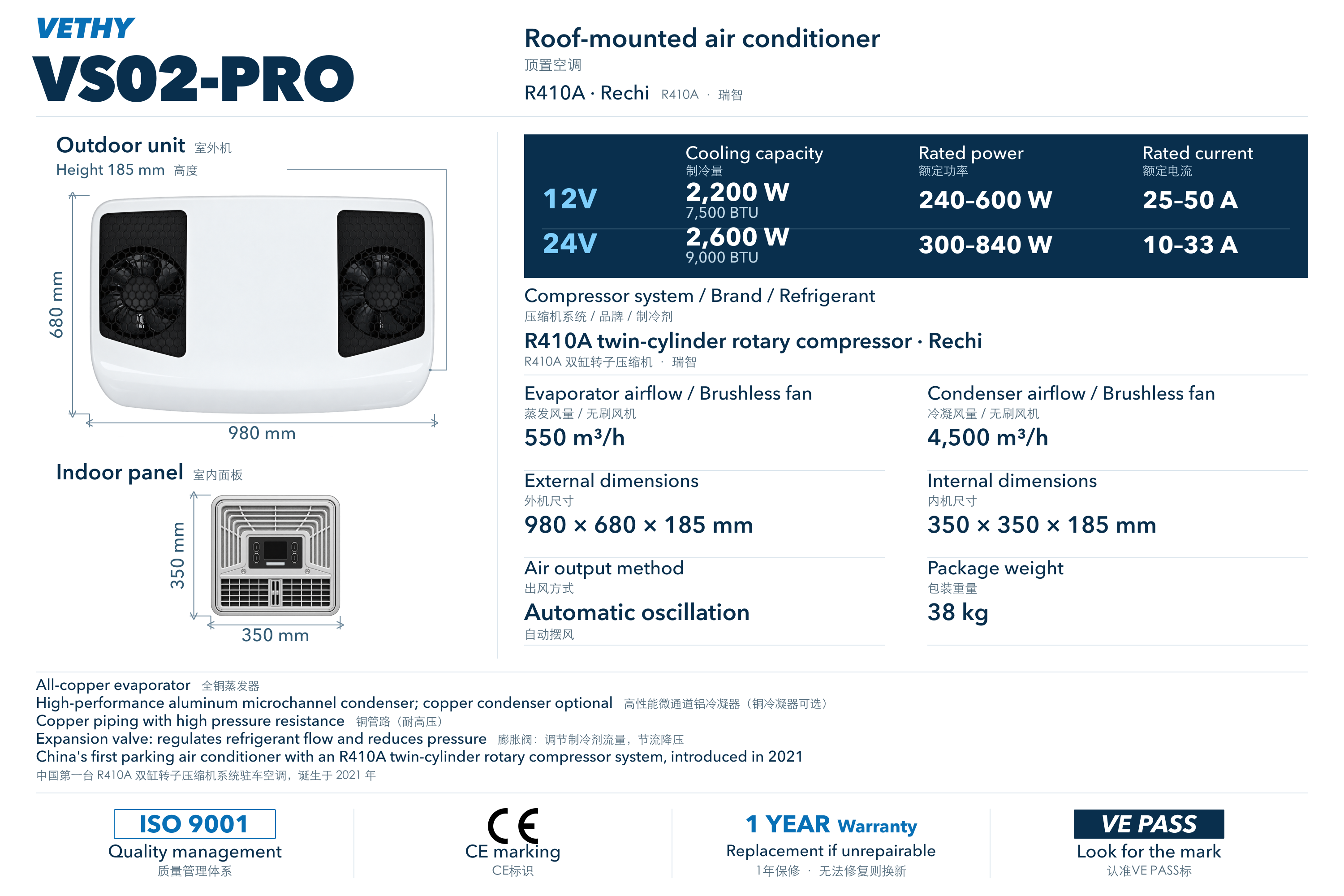
| VS02-PRO | Rooftop, cooling | 2,200 W / 7,500 BTU/h | 25–50 A | R410A |
Cooling output is heat removed from the cabin; it is not electrical consumption. These published values do not establish continuous current, vehicle fit or overnight runtime. Request test conditions and installation documents with the quotation.
VX3000SP and EcoMax 3S are split formats. VS02-PRO is a rooftop format. Use the matching specification sheet and review heating requirements separately; a cooling rating is not a heating rating. The current catalogue contains eight models, each with its own published configuration.
Check available energy and installation cost
Ask your installer to review the battery system, usable energy, charging arrangement, voltage range, other loads, cable routing, protection and starting reserve. Rated current is not a measured average over a rest period.
Budget the complete installation: unit, approved mounts, wiring and protection, battery or charging changes, labour, commissioning, shipping and service preparation. A low unit price can leave a substantial installation scope undefined.
Agree a sample trial before volume ordering
Define the cab temperature target, starting temperature, ambient conditions, test duration and battery limits. Record cabin temperature, electrical input, operating mode, noise observations and remaining usable energy. Check drainage, mounting security and access for maintenance. These are proposed acceptance checks, not VETHY test results.
Keep the tested model, voltage, controls and installation configuration in the purchase record. Changes after the sample should be reviewed before rollout.
Request a quotation that your fleet can evaluate
Send the vehicle details, installation photographs, destination, sample quantity, forecast volume and target timing. Request a configuration-specific bill of supply, installation documentation, spare-parts proposal, warranty terms and the certificates required for your market. Use the technical RFQ checklist to collect these details.
Do not assume a certificate for another model covers the proposed 12V unit. The document library identifies the scope and dates of the available records.
Sources and specification records
Updated October 30, 2026. Model ratings follow the linked VETHY specification graphics. General technical sources explain principles; they are not certifications or tests of VETHY products.
FROM SELECTION TO A DEFINED PROJECT
Bring the vehicle brief.
Share the truck model, voltage, operating climate, installation photos and intended quantities. VETHY can review the proposed configuration and the evidence needed for your application.