
VETHY / VX3000SP / PRODUCT AND APPLICATION GUIDE
VX3000SP for Distributors: Explain Split Cooling with the Correct Images
Present VX3000SP as a defined split cooling package with matching indoor and outdoor photographs, R134a rotary technology and separate 12V and 24V references. Show how automatic oscillation and 550 m³/h airflow relate to the customer’s occupied cab, then connect the presentation to a practical vehicle enquiry and a clearly scoped offer.
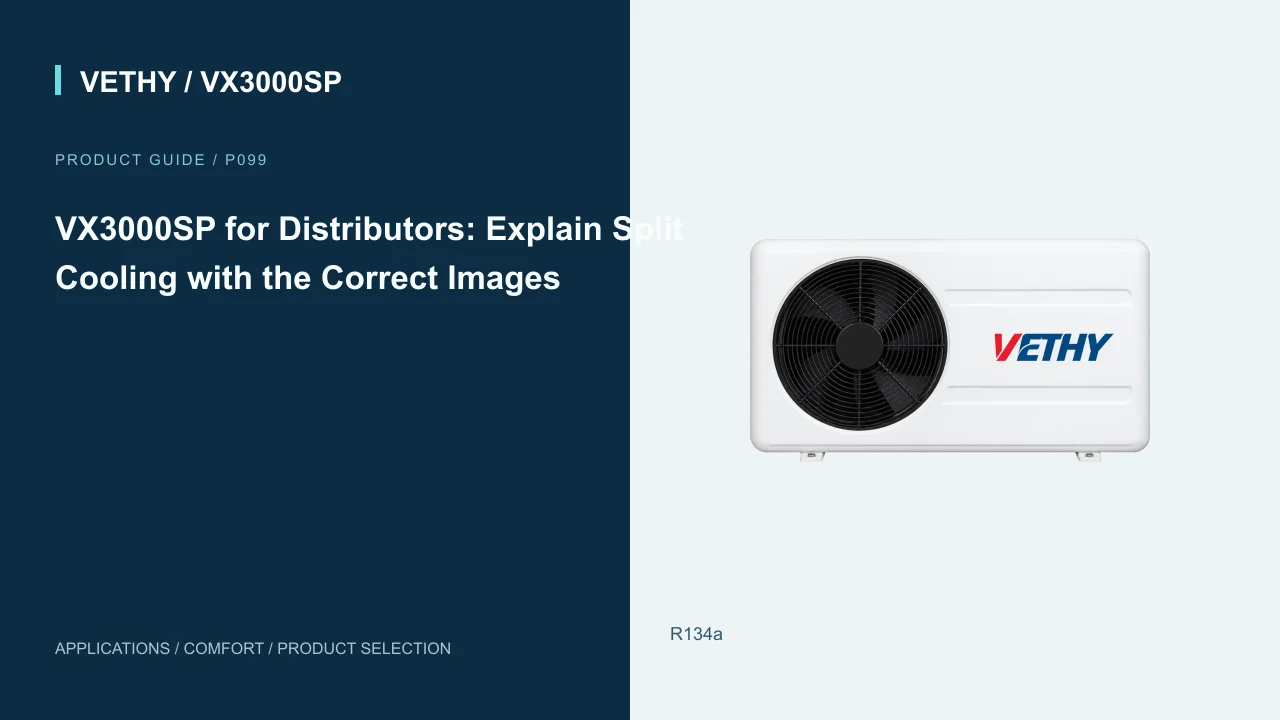
VX3000SP gives a distributor a clear product story: dedicated parking cooling in a split arrangement, with separate indoor and outdoor assemblies. That story becomes easier to understand when customers see the correct photographs together and can connect them with their actual truck. A recognisable product presentation is the beginning of a useful buying conversation.
The model uses R134a and a rotary compressor. Its source identifies 550 m³/h airflow, automatic oscillation and qualitative ultra-quiet positioning, alongside separate 12V and 24V references. These attributes offer several practical ways to discuss comfort and installation. The distributor’s job is to make those benefits visible without letting an attractive image imply a different configuration.
This guide follows the preparation of a VX3000SP presentation for a regional dealer network. It explains which assets to pair, how to organize the product information and how to guide customers toward the vehicle-specific details needed for a useful offer. The example is an editorial planning scenario, rather than a claim about an existing dealer program.
Begin with the customer’s reason for considering a split unit
A customer may arrive with a cab layout, roof-space priority or installation preference that makes separate indoor and outdoor placement attractive. Lead with that reason. Showing a split system as two related assemblies gives the buyer a better starting point than presenting an outdoor housing without explaining its role.
Ask the customer to describe the occupied space and where equipment might be accommodated. This is an initial discussion, not an installation approval. It helps the distributor decide which views and explanations will be useful. A driver concerned about the bunk needs a different first illustration from an upfitter comparing possible equipment locations.
VX3000SP’s documented split format supports both conversations. The cabin-side image can introduce the air-delivery assembly, while the outdoor image introduces the separate equipment that must be integrated appropriately. The buying advantage is a layout choice that can be discussed around the vehicle rather than an assumption that every project should use a rooftop housing.
End this first exchange with a specific next step. Request the vehicle identity and useful interior and exterior photographs, then show which VX3000SP references will be used to develop the proposal. The customer should understand why the product is being considered and what information will make the recommendation more precise.
Show the indoor and outdoor assemblies as one product package
Use a paired product view near the beginning of the presentation. Label each assembly in ordinary language and retain the VX3000SP model name beside the pair. A new buyer should not have to infer which photograph belongs inside the truck or whether two images represent alternative products.
The supplied outdoor and indoor photographs are useful precisely because they show the real named model. Keep their proportions intact and allow enough surrounding space for the shape to remain readable. A heavily cropped fan or outlet can be useful later as a detail, but it should not replace the complete first view.
Explain that the final offer also needs a confirmed supply scope. A photograph of two assemblies does not list every connection, mounting item or installation responsibility. Presenting the real product clearly creates the right moment to distinguish the visible equipment from the complete quoted package, without distracting the customer with an improvised parts inventory.
For a dealer, this pairing is a practical sales tool. The same recognizable equipment can appear on a product page, quotation attachment and handover reference. Customers can continue the conversation across those formats without wondering whether a different indoor panel or outdoor housing has quietly entered the offer.
Keep voltage references beside the correct product identity
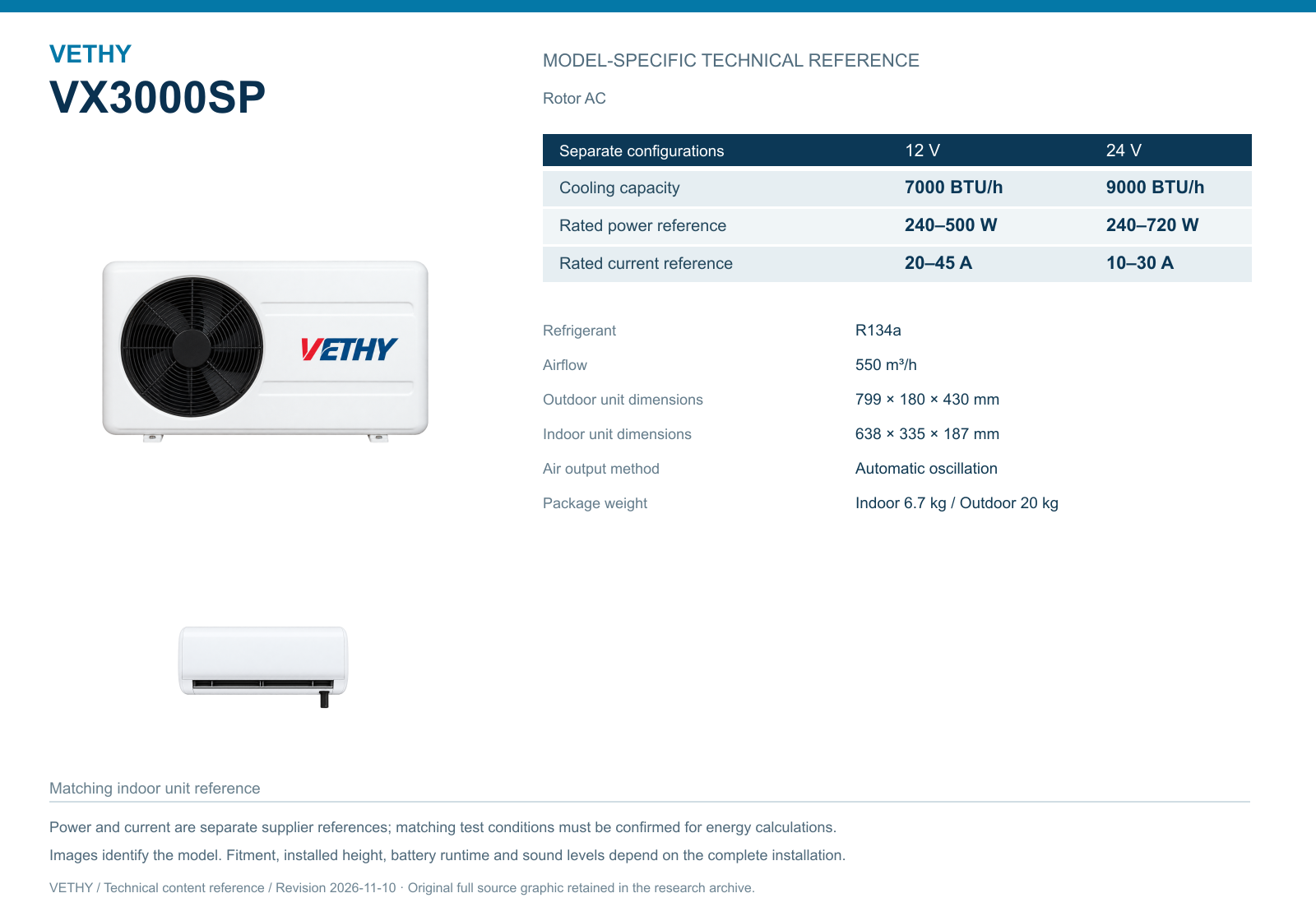
VX3000SP has separate 12V and 24V configurations. The 12V source lists 7000 BTU/h cooling, while the 24V source lists 9000 BTU/h. Put the selected voltage near the model name in the offer, even when the presentation uses common family photography. The images introduce the product form; the labelled specification identifies the offered version.
| Presentation element | What it should communicate | Useful distributor action |
|---|---|---|
| Paired product photographs | VX3000SP indoor and outdoor assemblies | Keep the model visible beside both views |
| Voltage heading | The specific 12V or 24V configuration | Match the customer’s engineered supply |
| Cooling reference | 7000 or 9000 BTU/h, attached to its voltage | Preserve the supplied unit and label |
| Air-delivery description | 550 m³/h airflow and automatic oscillation | Relate the features to occupied positions |
| Dimensional reference | Separate indoor and outdoor envelopes | Retain the complete source order |
| Offer scope | Equipment, installation and support responsibilities | Confirm what the actual quotation includes |
The power and current references should remain separately labelled. They do not establish a common operating point for a new efficiency calculation. This keeps the presentation coherent: a customer sees which version is relevant, which features belong to the model and which information the electrical specialist needs for the complete vehicle package.
Turn the indoor image into a comfort conversation
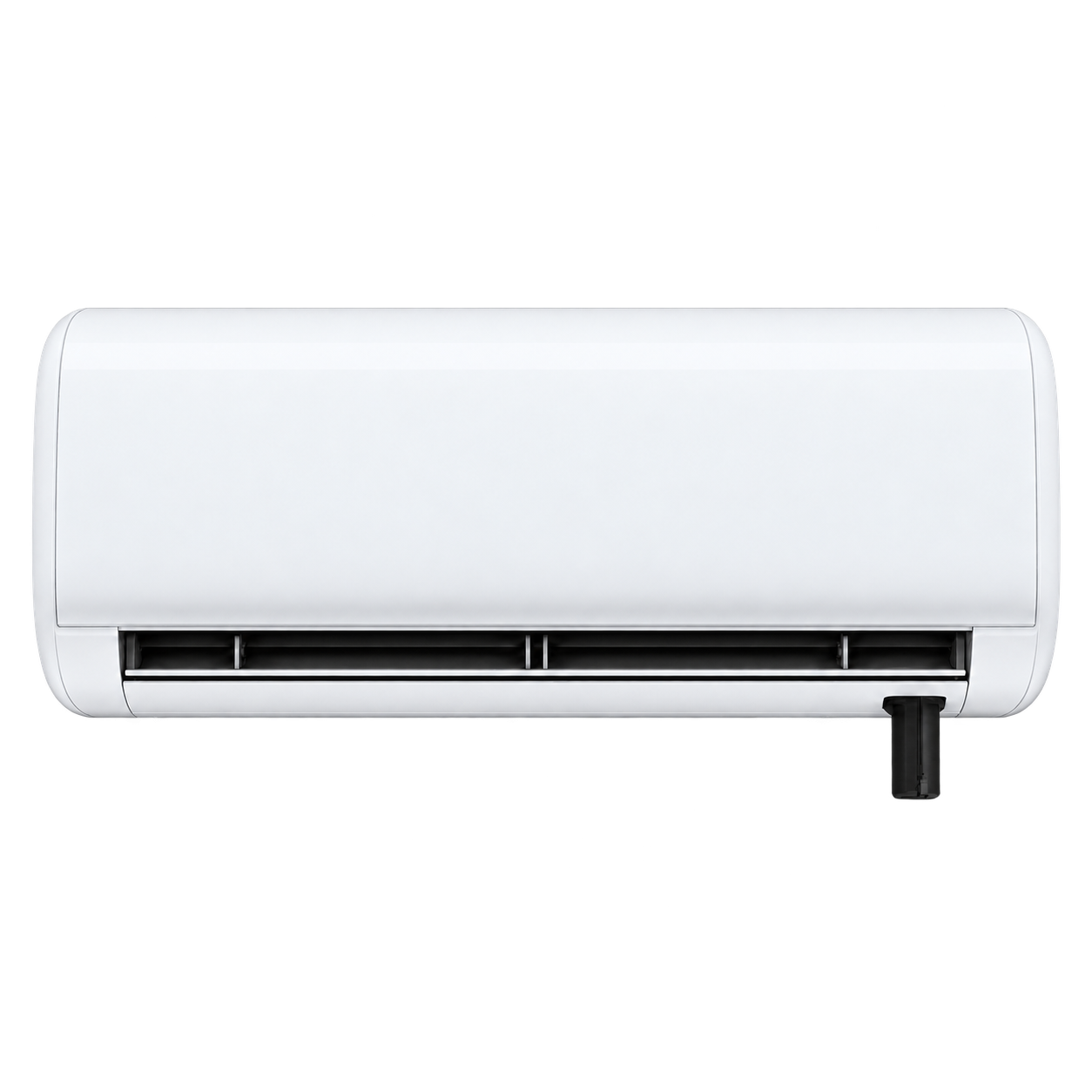
The indoor photograph can do more than decorate the page. Use it to explain where the occupant encounters the cooling system and why location matters. VX3000SP lists automatic oscillation and a 550 m³/h airflow reference, giving the distributor concrete features to connect with the driver’s seated and resting positions.
Show the customer’s actual seat, pillow position, curtain and normal storage in a separate vehicle photograph. Keep that vehicle view clearly identified as the project context. The product image explains the assembly; the vehicle image explains the space it is intended to serve. Together they make the discussion more useful than either image alone.
During a demonstration, let the customer experience the actual outlet behavior from the relevant positions. The distributor can explain the benefit of directed movement without creating an unsupported air-throw distance or pretending that a product photograph predicts the temperature at the bunk. The feature becomes tangible through an occupied arrangement.
This is especially useful when several people share a purchasing decision. A driver can describe comfort preferences, an installer can consider placement and purchasing can retain the correct model reference. The same cabin-side asset connects those discussions while leaving each person with a clear role in the proposed installation.
A short product card can support that conversation during a meeting. Put the complete indoor view beside the confirmed airflow and oscillation descriptions, with a space to note the customer’s preferred positions. The card is a discussion aid, not a measured performance report. It lets the team leave the meeting with a recognizable product and a more specific cabin brief, rather than only a favorable impression of the photograph.
Use the outdoor image to explain the installation choice
The VX3000SP outdoor assembly measures 799 × 180 × 430 mm in the supplied dimension order. Keep that order intact and use the applicable drawing when the installer needs axis-specific information. A perspective photograph is useful for recognizing the housing, but it is not a substitute for the installation drawing.
For a customer comparing locations, place the complete outdoor view beside the relevant vehicle photograph. Discuss the candidate location, air access, mounting responsibility, connecting route and service approach. The split format creates options to review; it does not make every visually convenient location suitable.
A clear presentation helps the customer understand why the distributor is recommending VX3000SP. The model may suit a project where a remote outdoor location works with the truck’s normal equipment and access. That is a concrete application benefit, provided the final arrangement is developed using the correct technical information.
Keep the roof discussion visible even when the preferred concept places equipment elsewhere. The customer may want to preserve roof space for another purpose, or may simply prefer the cabin layout offered by a split package. Explain the actual project reason rather than make a blanket claim that a remote location is always quieter or easier to fit.
Build a small asset family with a consistent purpose
A useful dealer asset set does not need dozens of almost identical pictures. Start with the complete paired view, individual indoor and outdoor views, a readable technical reference and the relevant application context. Each asset should answer a different customer question and retain the exact VX3000SP identity.
For a product listing, the paired view can introduce the architecture. A detailed enquiry response can use the individual assemblies and dimensions. A handover reference can retain the approved configuration and actual installed photographs. The progression follows the customer from recognition through selection to ownership instead of repeating the same promotional image everywhere.
Give assets names and captions that remain understandable outside the original page. A photograph forwarded through a messaging application may lose its surrounding paragraph. Keeping the model and image role available in the file record makes it easier for the sales team to send the right material and reconnect the image with the correct technical reference.
Retain a clear relationship between the original photograph and its display versions. Resizing for a website or brochure should preserve the actual product form. A compact thumbnail can link to a larger view, letting the buyer inspect the named equipment without making the initial page unnecessarily heavy or difficult to navigate.
Localize the explanation without changing the specification
A distributor serving different languages can translate the application explanation while preserving model names, values and units. Keep 12V and 24V as separate versions and retain the supplied BTU/h cooling references. A translation should make the buying decision clearer, rather than quietly create a new product rating.
Prepare a short terminology record for the team. It can identify the indoor assembly, outdoor assembly, cooling capacity, electrical input and package weight in the languages actually used. This is especially useful when sales, purchasing and installers use different everyday words for the same equipment. The technical reference remains the shared anchor.
Keep the customer-facing sequence consistent across languages: what the product is, why the split arrangement may suit the vehicle, which version is being considered and what information is needed next. This lets each market receive a natural explanation without losing the configuration that the company intends to supply.
For English web content, use descriptive image text and clear headings. The VX3000SP guide collection gives related application context, while the model-specific technical sheet supplies the product references. A distributor can send the relevant topic directly instead of asking every customer to search a general catalogue for the same answer.
Make quiet comfort and energy planning useful selling points
VX3000SP’s ultra-quiet positioning is qualitative. Use it to introduce a calm-comfort discussion that includes the indoor position, outdoor installation, mounting and normal cab surroundings. A real demonstration from the bunk makes that discussion more valuable than placing an unsupported decibel badge on a polished product image.
Energy planning also belongs beside the presentation. The source lists 240–500 W power and 20–45 A current references for 12V, and 240–720 W with 10–30 A for 24V. Keep those fields labelled separately and let the supporting supply assessment address the intended stop, usable energy, other loads and charging opportunity.
The customer benefit is a complete proposal that connects cooling equipment with the routine it is meant to serve. The distributor can discuss a comfortable occupied space and a realistic auxiliary arrangement together. There is no need to promise a universal night of cooling to make that combination commercially relevant.
Use the product image as a recognizable entry point into this fuller explanation. The attractive asset draws attention; the useful recommendation gives the buyer a reason to continue. The truck application overview can introduce the wider vehicle context before the conversation returns to the actual VX3000SP configuration and project requirements.
Prepare different sales routes for different buyers
An owner-driver often needs a concise explanation of how the product relates to the actual truck and resting routine. Begin with the paired photograph and a practical description of indoor comfort. Ask for the vehicle context and explain how the installer will assess the split arrangement and supporting supply.
A fleet may need a presentation that can move between operations, maintenance and purchasing. Retain the exact voltage version, representative vehicle information and the proposed demonstration scope. The photographs should stay consistent across those documents so each department can recognize the equipment being discussed, even when its own questions differ.
An upfitter may want the dimensional references and a clear route to the relevant technical information. The complete assembly views remain useful, but the next step is a coordinated vehicle layout rather than a broad promotional claim. Connect the image set with the responsible person who can progress the actual installation discussion.
For an importer building a local offer, define the intended customer and actual installation and support scope. A focused VX3000SP presentation can be persuasive because the product is recognizable and the next step is clear. The value lies in making the documented split package understandable to that market, rather than adding unverified local stock, warranty or service-network promises.
Connect the page to a useful enquiry and review process
Give the customer a clear destination after the product explanation. The vehicle technical brief is useful when the buyer can provide the truck, supply arrangement, occupied space, parking schedule and installation photographs. Those details let the product discussion develop into a reviewable proposal.
Keep the enquiry context with the images that prompted it. If the customer is considering a particular indoor position or comparing remote outdoor locations, retain that information rather than restart the conversation with a generic model request. Sales can then pass a coherent brief to the responsible technical team.
The internal review should end with an identifiable version and scope. State what equipment is proposed, which installation responsibilities are included and what information remains to be resolved. The customer sees a product recommendation that is progressing toward the actual vehicle, rather than an endless exchange of attractive photographs with no defined offer.
If a distributor measures website enquiries, distinguish attention from a qualified buying request. An image click can show interest, while a useful vehicle brief gives the team more substantive information. Review which questions customers still ask and improve the explanation accordingly. The article does not assign a promised conversion rate to a particular photograph or layout.
Carry the same product identity into the quotation and delivery
The quotation is where a helpful presentation becomes a specific commercial offer. Retain the VX3000SP name, selected voltage and matching assembly views in the relevant attachment. Keep the product description concise enough that purchasing can identify the equipment without rebuilding the original sales conversation from separate messages.
A distributor can organize the attachment around three customer questions. Which cooling package is proposed? What vehicle and occupied task is it intended to serve? What is included in the actual supply and installation scope? The answer should connect the model references with the customer’s application rather than repeat every paragraph from the product page. The full guide remains available for readers who need the explanation behind a particular choice.
When a configuration changes during the discussion, update the offer deliberately. A customer may revise the supporting voltage arrangement or propose a different indoor position after a technical review. Keep the revised product and vehicle information together so an earlier illustration does not silently remain the apparent basis for the final order. The goal is an understandable decision, with a clear record of what the customer accepted.
At delivery, retain the actual supplied equipment record and the relevant installation information. The original product photography remains useful for recognition, while completed vehicle photographs show the arrangement that was actually fitted. Label those installed photographs by their real scope. A single customer-approved example can illustrate its own installation; it should not be presented as proof that every visually similar truck has the same fit or result.
This continuity is a meaningful distributor benefit. The buyer encounters the same recognizable VX3000SP package during selection, ordering and ownership, while each stage adds the information appropriate to that decision. Technical support can begin from an identifiable model and completed installation. A repeat order can return to the agreed configuration rather than depend on somebody remembering which product image was sent first. Clear images support the relationship across the purchase, giving the customer a useful reference after the initial marketing impression has passed.
Questions distributors commonly need to answer
Can one product photograph represent both voltage versions?
It can introduce the documented model family when the actual offered configuration is clearly identified. Keep the chosen voltage and its correct ratings beside the product information. Confirm that the supplied equipment matches the offer, rather than assuming that a common appearance makes the two electrical versions interchangeable.
Do the indoor and outdoor weights describe installed net loads?
The VX3000SP source lists indoor 6.7 kg and outdoor 20 kg as separate package weights. They are not supplied as net assembly weights or a combined installed-load rating. Keep those labels when discussing transport, and obtain the appropriate equipment and installation information for the vehicle engineering work.
Can the presentation describe inverter or twin-cylinder technology?
The documented VX3000SP description establishes rotary cooling, but does not establish an inverter control system, cylinder count or compressor brand. Present the model through its confirmed split format, airflow, automatic oscillation and voltage-specific references. Do not borrow the technology identity of a different VETHY product merely because it appears in the same catalogue.
What should a customer receive after the first presentation?
Provide the relevant model reference, selected or provisional voltage and a clear request for the vehicle information needed next. If a technical review or demonstration is appropriate, describe its purpose and actual scope. A useful follow-up turns interest in VX3000SP into a defined discussion about the customer’s installation and cooling task.
Recommend a recognizable product with a clear next step
VX3000SP is a compelling distributor candidate when separate indoor and outdoor cooling placement fits the target customer’s vehicles. Matching photographs, readable specifications and a practical cabin explanation make its documented features easier to value. The buyer can recognize the equipment and understand why the model belongs in the discussion.
Prepare the product presentation around that relationship. Keep the voltage, source references and actual supply scope visible, then request the vehicle details needed to develop the offer. A confident VX3000SP recommendation gives the customer both a clear product identity and an achievable next action, supported by the right images throughout the process.
Product sources
- VETHY VX3000SP model-specific technical specifications — VETHY.
- VX3000SP technical reference sheet — VETHY.
VETHY product recommendation and application analysis. Specification references identify the selected model and voltage. Installation examples are planning examples; measured project results are identified explicitly when available.
Discuss your VX3000SP application
Send your vehicle, supply voltage, occupied space, parking schedule and installation photographs for a model-specific recommendation.
Prepare your vehicle brief ↗